When you visit our website, information may be stored or recovered on your device, mainly in the form of cookies. We use essential cookies to ensure the website works as it should, and statistical and marketing cookies for audience measurement and content customisation purposes. We rely on Google to store your consent choices and manage the activation of cookies accordingly. For more information on this, please also refer to the Google policy on Business Data Responsibility.
From the Cookie Management Centre, you can set your preferences with respect to the use of cookies: accept or reject certain categories, accept all, or reject all. For detailed information on all cookies used across these three categories, please refer to our Cookie Policy.
Please note that blocking certain cookies may affect your experience and the services offered.
Essential cookies Always active
Essential cookies help the website to work as it should by enabling necessary functionalities, such as navigating between pages and accessing secure areas. These cannot be disabled in our systems.
Statistical cookies
Statistical cookies help us understand how visitors interact with our site by collecting and communicating browsing information. They make it possible to identify the most and least visited pages and to improve the overall performance of the site.
Marketing cookies
Marketing cookies are used to display relevant advertising and measure the performance of campaigns. If you choose not to allow these cookies, you will continue to see ads, but they will be less relevant to your interests.
Choose the purposes for which we may use Google products to collect and use your data:
User storage: to technically permit advertising functionality.
User data for advertising: to optimise our advertising campaigns.
Ad customisation: to tailor advertising to your interests.
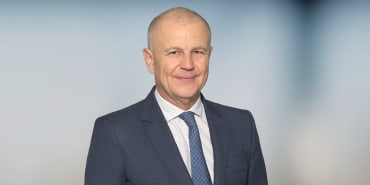
Passive investing has transformed asset management, while fee pressure continues to intensify. Yet according to Bettina Ducat, Co-Head of Lombard Odier Investment Managers, the most attractive opportunities are emerging precisely where markets lack consensus. In this interview, she explains why structural transformations are creating new sources of alpha, why sustainability should be viewed as a research framework rather than a label, and why specialisation may prove more valuable than scale in the years ahead.
Ms Ducat, in an environment of increasing standardisation and cost pressure: where exactly do you see the measurable value added of an active asset manager today?
The debate around active management is often framed narrowly towards one question: can you outperform an index after fees?
We believe that definition of value is incomplete. In an increasingly standardised and cost-conscious environment, clients are not only looking for returns, but also for a world where economic systems are evolving fast and where uncertainty is structurally higher. In that context, our role extends beyond simply allocating capital. It is to help clients interpret change and make informed decisions.
Ultimately, in a world where products are increasingly commoditised, insight, judgement and partnership become the real sources of differentiation.
sign up for our monthly newsletter.
Thank you for subscribing to our monthly newsletter!
There was an error registering your subscription. Please email loim-digital@lombardodier.com.
Which areas do you consider particularly vulnerable to commoditisation – and where can active management still generate sustainable alpha?
Commoditisation is a natural outcome when investors seek exposure to risks that are already well understood and easily defined. If the objective is to access broad equity markets, sector exposure or benchmark-oriented fixed income, low-cost passive solutions are often highly efficient and appropriate. In those areas, the value of active management is understandably challenged.
“In complex and evolving markets, cost-based oversimplification can become a risk-return constraint.”
However, the most compelling investment questions today lie precisely where there is no consensus and where future value creation is uncertain. This is increasingly the case in areas shaped by structural transformations such as the transition economy, changes in resource systems or evolving industrial models. Passive investing reflects the economy as it exists today.
Active investing seeks to identify the economy that is emerging tomorrow. That requires sometimes challenging assumptions, forming a view and dealing with increased uncertainty.
Lombard Odier Investment Managers places a strong emphasis on specialisation. How can this model be defended over the long term against the economies of scale enjoyed by larger providers?
Scale has been one of the dominant forces in asset management over the past decades, and it has delivered clear benefits in terms of efficiency and cost reduction. However, scale often relies on standardisation – and while standardisation improves efficiency, it can impede investment outcomes when cheap implementation drives allocation decisions. In complex and evolving markets, cost-based oversimplification can become a risk-return constraint.
Our approach is not to reject scale, but to recognise its limits. We believe there is enduring value in specialisation when it leads to a deeper and more accurate understanding of reality.
Our objective is not to be different for the sake of differentiation, but to build investment solutions that more precisely reflect how economic systems are changing. This requires focus, research depth and the willingness to challenge widely accepted frameworks – for example, in how decarbonisation is measured or how it is integrated within tightly risk-controlled core equity and fixed income solutions.
What role do structural transformations – for example, in the context of the ‘transition economy’ – play in your investment strategy and in your clients’ asset allocation?
Structural transformations are central to how value is created and redistributed across the global economy. They affect everything from energy systems and industrial processes to food production, healthcare and financial infrastructure. They shape regulation, capital flows and competitive dynamics across virtually every sector.
Most traditional investment approaches start with companies and assess their attractiveness based on current fundamentals and historical trends.
“Sustainability is often approached as a reporting framework or a set of constraints layered into otherwise conventional investment processes.”
We take a different starting point. We begin by analysing how economic systems are evolving, asking where value is likely to migrate over the coming decade, which activities may face increasing constraints, and which solutions are emerging in response to global challenges.
In that sense, understanding structural transformations provides the framework through which we interpret the future. This systems-level perspective allows us to identify opportunities and risks that are often not yet fully reflected at the company level. Ultimately, it helps us move from analysing the present to anticipating how value will be created in the future.
Lombard Odier Investment Managers emphasises that sustainable investing is not a label but a research engine. What does this mean in concrete terms for the investment process – and how does it differ from traditional ESG approaches?
Sustainability is often approached as a reporting framework or a set of constraints layered into otherwise conventional investment processes.
For us, it is different. It is an investment approach with a research framework deeply rooted in fundamental economics and investment. We start by observing that many of today’s economic systems – energy, materials, food, healthcare, nature – are under increasing pressure.
These pressures create challenges but also drive innovation and the emergence of new solutions. When large-scale challenges give birth to superior solutions, economic systems begin to transform. Value chains are reorganised, and new leaders emerge while others are disrupted. Our research therefore starts with challenges and solutions – not with companies.
This allows us to understand how value will be created in the future. In that context, sustainability is not a constraint that limits the investment universe. It is an analytical tool that helps identify future sources of return across a broad set of sectors and industries.
Where do you currently see the greatest mispricings related to the transition economy – and how can these be systematically identified and captured?
Many of the large mispricings in the transition economy arise from the fact that markets tend to extrapolate the present, while transitions are inherently non-linear.
We frequently observe two types of inefficiency: on one side, emerging solutions – whether in energy systems, materials or industrial processes – are often underestimated. Their rate of adoption, scalability or economic viability can be misjudged, leading to underappreciated upside. On the other side, legacy business models are sometimes overpriced given their exposure to structural risk. Markets may assume gradual change where in reality disruption can accelerate quickly.
“Clients are no longer simply looking for products; they are looking for insight, conviction and partnership.”
At the same time, rooting our investment approach into a deep understanding of systems change enables us to identify those incumbents that will rewire themselves. Capturing these mispricings requires a systematic understanding of how value chains are being reshaped. By mapping challenges, solutions and the evolution of economic systems, we can identify where markets remain anchored in outdated assumptions. This forward-looking perspective allows us to position portfolios not just for current conditions, but for where value is likely to emerge over the next decade.
Alongside institutional mandates, you are expanding the wholesale business and alternative investments. Where do you see the main growth levers in the coming years?
We do not start with asset classes or distribution channels. We start with a single question: where can differentiated thinking create value for clients?
Our strength is a consequence of applying a consistent research framework across different asset classes. In alternatives, we see opportunities where structural transformations are often more directly expressed – for example, in private equity secondaries, asset-backed lending, regenerative value chains or transition materials. In wholesale, the evolution is equally significant. Clients are no longer simply looking for products; they are looking for insight, conviction and partnership. The capabilities we have developed serving highly sophisticated institutional and private clients are therefore naturally extendable to a broader client base.
What role will alternative investments play in a diversified portfolio going forward – especially in the current market environment with structurally lower return expectations?
Alternatives are becoming an increasingly important component of portfolios, not only because of the return environment, but because they provide access to parts of the economy that are not always represented in public markets.
Many structural transformations – particularly in areas such as infrastructure, emerging industrial solutions or land-based value chains – are taking place outside listed markets, or at earlier stages of development. Alternatives can provide more direct exposure to these changes. Their role is therefore not limited to diversification or the illiquidity premium. It is also about broadening the opportunity set and accessing sources of value creation that may otherwise remain out of reach.
As a partnership without short-term shareholder pressure, you are able to operate differently from listed providers. Where does this advantage become tangible in the investment process and in strategic direction?
Our partnership structure allows us to align our time horizon more closely with that of our clients, without the pressure of short-term shareholder expectations.
In practice, this means we can take positions that may require time to mature, invest in research capabilities that do not deliver immediate commercial outcomes, and challenge the consensus when necessary. It also allows us to remain disciplined in how we grow the business. We do not need to pursue scale for its own sake if it risks diluting the quality or relevance of what we offer.
“The quality of investment decisions depends on the quality of interactions.”
This stability supports a more consistent investment philosophy and a clearer strategic direction. Ultimately, the advantage is not structural in itself – it becomes tangible in the quality of decisions, the depth of research and the alignment with clients’ long-term objectives.
What significance does the 1Roof headquarters have for collaboration between investment, research and distribution – and how does this impact the quality of investment decisions?
The 1Roof headquarters is a physical expression of how we believe an investment organisation should function. It was designed around transparency, energy, openness and beauty rather than hierarchy, separation and detachment. This is not simply an architectural choice. It reflects a belief that investment management is fundamentally a business of ideas.
The quality of investment decisions depends on the quality of interactions – how people challenge each other, share perspectives and build conviction across disciplines. By bringing investment, research and distribution teams into closer and more fluid interaction, the building encourages exactly that dynamic. It fosters a culture where ideas circulate more freely and where assumptions can be questioned more openly. In that sense, the headquarters is not just a place to work. It actively contributes to how we think – and therefore to the quality of the decisions we make.
subscribe to investment insights and strategy updates
Preference Centre
important information.
For professional investors' use only
This document is a Corporate Communication for Professional Investors only and is not a marketing communication related to a fund, an investment product or investment services in your country. This document is not intended to provide investment, tax, accounting, professional or legal advice.