When you visit our website, information may be stored or recovered on your device, mainly in the form of cookies. We use essential cookies to ensure the website works as it should, and statistical and marketing cookies for audience measurement and content customisation purposes. We rely on Google to store your consent choices and manage the activation of cookies accordingly. For more information on this, please also refer to the Google policy on Business Data Responsibility.
From the Cookie Management Centre, you can set your preferences with respect to the use of cookies: accept or reject certain categories, accept all, or reject all. For detailed information on all cookies used across these three categories, please refer to our Cookie Policy.
Please note that blocking certain cookies may affect your experience and the services offered.
Essential cookies Always active
Essential cookies help the website to work as it should by enabling necessary functionalities, such as navigating between pages and accessing secure areas. These cannot be disabled in our systems.
Statistical cookies
Statistical cookies help us understand how visitors interact with our site by collecting and communicating browsing information. They make it possible to identify the most and least visited pages and to improve the overall performance of the site.
Marketing cookies
Marketing cookies are used to display relevant advertising and measure the performance of campaigns. If you choose not to allow these cookies, you will continue to see ads, but they will be less relevant to your interests.
Choose the purposes for which we may use Google products to collect and use your data:
User storage: to technically permit advertising functionality.
User data for advertising: to optimise our advertising campaigns.
Ad customisation: to tailor advertising to your interests.
Fixed Income Strategist and Senior Portfolio Manager
key takeaways.
While Kevin Warsh was seen as a political appointee for Federal Reserve Chair, his actions so far have been those of an independently minded central banker rather than an instrument of the Trump administration
Warsh wants to shrink the Fed balance sheet and favours ending forward guidance, with a series of task forces to review Fed activity – but there is continuity on monetary policy in the ongoing high growth, high inflation environment
We remain broadly risk-on, staying overweight on emerging market hard-currency corporate and sovereign bonds. In developed market government debt, we prefer European sovereign bonds to US Treasuries.
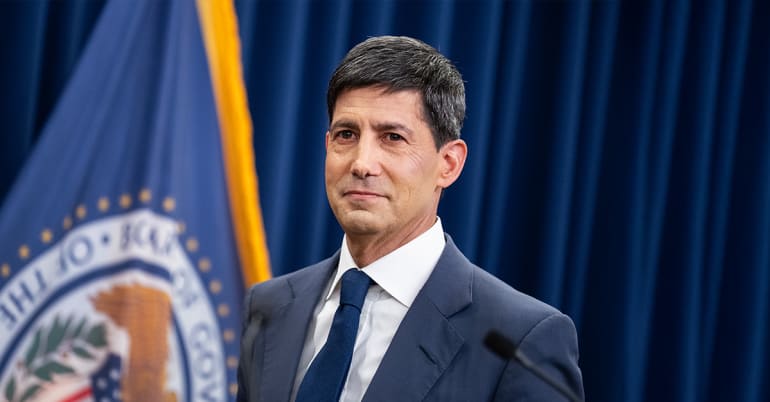
Kevin Warsh’s first actions and announcements as the new US Federal Reserve (Fed) Chair have demonstrated the Trump appointee is no puppet, or dove. Yet while the uncertainty overhang has dissipated and market concerns regarding Fed independence have been laid to rest for now, the new Chair has already shown he has his own vision for the central bank. So, what can we learn from the outcome of the first Federal Open Markets Committee (FOMC) meeting with Warsh at the helm, and what does it mean for investing in fixed income?
Fears of political meddling at the Fed are receding
President Trump’s nomination of Warsh as the replacement for Jerome Powell had led many to fear a more politicised regime at the central bank. The US president had already attempted to remove board member Lisa Cook, nominated his ally Stephen Miran as a governor and encouraged a criminal investigation of then-Chair Jerome Powell.
Trump’s efforts to stuff the Fed board with loyalists have been countered for now, however, with Powell and Cook’s continuing involvement providing continuity. No further political appointment is currently in sight, raising the question of whether Warsh can build consensus and shift the balance of power within the FOMC.
sign up for our monthly newsletter.
Thank you for subscribing to our monthly newsletter!
There was an error registering your subscription. Please email loim-digital@lombardodier.com.
What changes has Kevin Warsh put in place in his first Fed meeting as Chair?
As the first with Warsh in charge, the Fed’s June meeting marked the beginning of a new era. The most immediately visible change was the Chair’s 130-word policy statement, which was considerably pithier than the 300-plus word statements of the late Powell era. Warsh described it as one that "just gives you the facts".
The shortening of the statement came from the explicit removal of forward guidance, which Warsh said was "not well suited to the current policy conjuncture". The new Chair also refrained from providing his view for the Summary of Economic Projections (or ‘dot-plots’), albeit while encouraging his colleagues to continue to do so.
Warsh announced a series of task forces in five areas central to the broad conduct of monetary policy: Fed communications; the Fed’s balance sheet; the use of and reliance on existing data sources; productivity and jobs in an era of transformation; and the Fed’s inflation frameworks. The new Fed Chair has chosen experts from both inside and outside the economics profession to lead the task forces, including former Bank of England governor Mervyn King and tech entrepreneur Marc Andreessen. They are expected to begin work within weeks.
Warsh expects AI to have a big impact, and wants to reduce the Fed balance sheet
Market concerns have mostly focused on the new Fed Chair’s views on artificial intelligence (AI), which he expects to drive a major US productivity revolution at the same time as being a disinflationary force.1 This view is a key differentiator for Warsh, and one that he will want to build support for among the FOMC. If true, it would mean the economy can grow over the long term without driving inflation, enabling lower Fed policy rates. However, achieving strong growth with full employment while keeping inflation in check is essentially the best of all possible worlds. Even if it proves possible, it is likely to be difficult to maintain.
Warsh has also expressed a desire to reduce the Fed’s balance sheet, which reached USD 9 trillion at one point before contracting to its current level of around USD 6 trn. Instead, the new Chair believes the Fed should conduct monetary policy primarily through short-term interest rate changes.
Our view: Warsh is less political pawn, more independently-minded central banker
In his early actions, Warsh has given the impression of the experienced senior central banker he is, rather than a maverick or political puppet. It should not be forgotten that the new Fed Chair was a member of the Board of Governors at the bank from February 2006 to March 2011, gaining valuable experience through the global financial crisis. It’s also worth remembering that Jerome Powell was himself a Trump appointee.
We see a new Chair committing to a thorough, honest and transparent review of current practices, with a view to identifying the changes required to make the Fed more effective in achieving its objectives. Warsh does not sound like someone preparing to tear up the rule book: a commitment to deliver on price stability was repeated multiple times during the post-meeting press conference, leaving little doubt Warsh’s key focus today is no different than Powell’s.
The removal of the Fed’s forward guidance is a significant step, effectively reversing the existing feedback loop. Rather than markets pricing how the Fed is likely to react to the evolving economic situation, the bank can take into consideration what markets are pricing when taking decisions.
Previously, the Fed’s approach was to signpost future rate announcements to avoid wrongfooting markets. The removal of forward guidance means the bank can regain the flexibility to adjust to changing conditions without feeling constrained by its prior pronouncements.
Over time, greater uncertainty regarding the outcome of Fed meetings could add to term premia, resulting in a higher yield curve. However, in the short term, the removal of uncertainty around the political independence of the bank provides a counterbalance, suggesting the net impact is likely to be moderate.
Greater uncertainty regarding the outcome of Fed meetings could add to term premia, resulting in a higher yield curve
AI’s economic impact
The long-term impact of AI should be disinflationary, thanks to higher productivity and lower labour costs. However, delivering on its promise will require huge capex and vast quantities of advanced chips, datacentre capacity, power and labour (which is being constrained by tighter immigration controls). In the short term, demand may outstrip supply on all of these, driving inflation. Ultimately, AI’s inflationary impact will come down to timing and whether the transition between short-term and long-term trends can be managed effectively.
At the same time, the jury is still out on the scale of potential ROI from AI. Productivity improvements are so far limited to specific sectors such as software development, while there is growing pushback from the public regarding the use of AI and its demands on key resources. Political pressure is also mounting, with Democrats already campaigning on the issue of AI-related job losses and higher energy costs ahead of the midterms in November.
AI’s inflationary impact will come down to timing and whether the transition between short-term and long-term trends can be managed effectively
Fed task forces
The announcement of a series of task forces is reassuring. Findings are expected by the end of the year — long enough to conduct thorough analysis and prepare markets, but soon enough to move forward rapidly. Overall, while Warsh’s views are definitely shaping the agenda at the Fed, early evidence indicates that changes will be gradual and built on consensus, backed by adequate independent research.
FIG 1. Our convictions for sovereign and corporate debt going into Q32
Are US rate hikes or cuts likely?
At its June meeting, the FOMC kept the benchmark federal funds target range steady at 3.5-3.75%.
The inflationary threat from higher energy prices had receded significantly in the wake of the US-Iran ceasefire and Memorandum of Understanding. Having repeatedly spiked above USD 110 per barrel, Brent Crude fell below USD 72 in early July – not far off pre-conflict prices of around USD 65. However, the truce has already proven fragile, and as we write, renewed conflict has begun to send oil prices climbing again. Hammering out the finer details of a lasting agreement will take time and there will potentially be more bumps in the road.
Despite the easing of inflationary concerns, in early July, markets were pricing more than one Fed hike before year end – a sharp reversal from pricing in more than two cuts at the end of February. This change in market view has been driven by the consistent strength of the US economy, with huge AI-related capex spending providing a boost to wider economic activity. As a result, labour market data has remained strong, as has US consumer spending. As highlighted by the press conference, in this environment, the Fed’s priority is price stability rather than full employment.
With few signs of the deceleration in activity many had feared, the case for easing seems limited barring an unexpected slowdown. Conversely, we don’t see the Fed embarking on a prolonged hiking cycle unless inflation spirals higher, which is not our base case.
Looking ahead, we see market pricing oscillating between no-change and two rate hikes, with 2-year US Treasury yields at 4.25% offering value. Currently, the recent repricing of policy rate expectations has flattened the yield curve. However, we believe a temporary rebuilding of term premia could exert upward pressure on the long end of the curve as the US midterms approach.
Government bond valuations in general have improved as markets have priced higher policy rates in reaction to renewed inflation pressure and geopolitical risk. In Europe, inflationary pressures are mostly coming from energy prices and conflict-related disruption, whereas the US is experiencing additional pressure from AI capex spending and a tight labour market. We therefore see more value in European sovereign bonds than US Treasuries for now.
We see short (2-5 year) maturities as attractively valued, while cautious on long-dated maturities, mainly in the US. This is because the long end of the curve is more likely to experience a repricing of term premia as public finances deteriorate and investors question the sustainability of debt levels.
While stickier-than-expected inflation is not our base case, the strong impact of AI-driven investment on inflation dynamics creates uncertainty. US Treasury Inflation-Protected Securities (TIPS) continue to offer a relatively cheap hedge against any sudden reversal, while locking in inflation-protected real yields of above 2%.
The stronger economic backdrop in the United States leads us to favour US high-yield bonds over their European counterparts. Although spreads on both investment-grade and high-yield rated issuers are historically low, lower recession risks and solid earnings momentum speak in favour of the carry offered by corporate bonds.
Despite temporary impacts from the Middle East conflict, we see resilience in emerging markets both from a micro and macro perspective. We remain overweight on both emerging market hard-currency corporate and sovereign bonds, which we see as offering the strongest yield opportunities relative to credit quality in fixed income.
subscribe to investment insights and strategy updates
This document is a Corporate Communication for Professional Investors only and is not a marketing communication related to a fund, an investment product or investment services in your country. This document is not intended to provide investment, tax, accounting, professional or legal advice.