When you visit our website, information may be stored or recovered on your device, mainly in the form of cookies. We use essential cookies to ensure the website works as it should, and statistical and marketing cookies for audience measurement and content customisation purposes. We rely on Google to store your consent choices and manage the activation of cookies accordingly. For more information on this, please also refer to the Google policy on Business Data Responsibility.
From the Cookie Management Centre, you can set your preferences with respect to the use of cookies: accept or reject certain categories, accept all, or reject all. For detailed information on all cookies used across these three categories, please refer to our Cookie Policy.
Please note that blocking certain cookies may affect your experience and the services offered.
Essential cookies Always active
Essential cookies help the website to work as it should by enabling necessary functionalities, such as navigating between pages and accessing secure areas. These cannot be disabled in our systems.
Statistical cookies
Statistical cookies help us understand how visitors interact with our site by collecting and communicating browsing information. They make it possible to identify the most and least visited pages and to improve the overall performance of the site.
Marketing cookies
Marketing cookies are used to display relevant advertising and measure the performance of campaigns. If you choose not to allow these cookies, you will continue to see ads, but they will be less relevant to your interests.
Choose the purposes for which we may use Google products to collect and use your data:
User storage: to technically permit advertising functionality.
User data for advertising: to optimise our advertising campaigns.
Ad customisation: to tailor advertising to your interests.
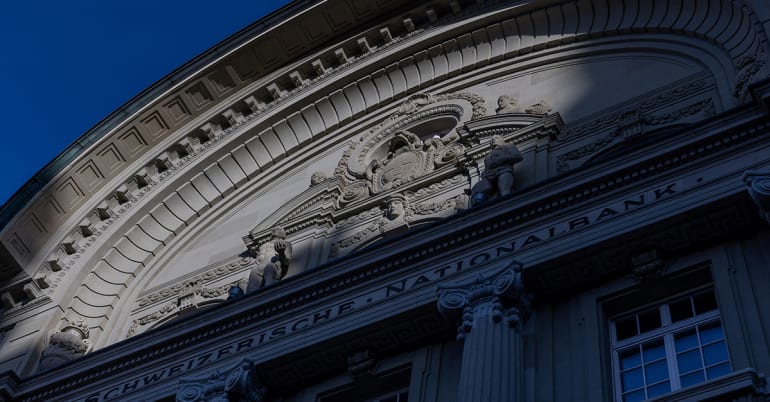
Swiss central bank embarks on an era of transparency
Philipp Burckhardt, CFA
Fixed Income Strategist and Senior Portfolio Manager
Markus Thöny
Head of Swiss Fixed Income
key takeaways.
The Swiss National Bank kept interest rates on hold, as rising prices eased the threat of negative inflation
Though Switzerland is still reeling from President Trump’s high tariffs, the rates move was widely expected
Policy makers are also shifting to an era of greater transparency, diminishing the likelihood of future surprises.
Swiss rates unchanged despite tariffs
The Swiss National Bank (SNB) offered few surprises by leaving key interest rates unchanged at its September meeting. With rates held at 0%, Swiss monetary policy is already well below its neutral rate, enabling the central bank to keep all options on the table as the country navigates the economic implications of President Trump’s tariffs.
In August, the US president imposed an unexpected 39% tariff rate on Switzerland – a much higher level than the 15% rate applied to the European Union – and in September announced a rate of 100% on pharmaceutical products. Despite ongoing government efforts to lower this rate, the central bank was compelled to factor the economic impact of these tariffs into its decision.
Acknowledging the tariff impact on its growth outlook for the nation – dampened exports and investment – the central bank noted that the economic consequences have so far been limited. The SNB continues to forecast GDP growth between 1% and 1.5% for 2025 as a whole, although this may fall just below 1% for 2026.
Given the already stimulative interest rate position, we do not anticipate further action from the SNB to protect growth and believe that the overall economic impact from high US tariffs will remain manageable. However, the extent to which they affect individual sectors – notably the watch industry and medical device manufacturers – will be closely watched.
In our view, the issue of tariffs is more of a political matter. To protect the economy, we could see the government apply some further policy levers, having already relaxed labour laws to provide a little more employment flexibility to help impacted industries weather the tariff shock.
Deflation risk averted
In contrast to June’s policy meeting, when negative inflation was one of the decisive factors behind the interest rate cut, the last few months have been encouraging for the SNB. Prices have increased slightly over the quarter, rising from -0.1% in May to 0.2% in August. The central bank expressed confidence that inflation will remain within its range of price stability over its entire forecast horizon.
FIG 1. Switzerland inflation measures and conditional inflation forecast1
The Swiss franc was also less volatile over the last three months than it had been during the first half of the year, giving the SNB another reason to pause before making any further changes to monetary policy. And as this latest interest rate decision was essentially priced in, we do not expect any significant reaction from the Swiss currency.
FIG 2. Switzerland exchange rates2
A stark shift in communication strategy
Since taking on his role as SNB chairman, Martin Schlegel has clearly expressed his belief that the hurdle for negative rates should be relatively high in order to avoid any adverse side effects. In June, he stated, “Negative rates also have negative side effects for savers, bankers, pension funds, and so on – we are very aware of that. If we were to lower rates into negative territory, then the hurdles would certainly be higher than with a ‘normal’ rate cut in positive territory.”
As a result of this signposting, September’s policy decision was widely anticipated. The new chair has also implemented a further step in transparency by announcing that the SNB will commence publishing a summary of its monetary policy discussions. This move aligns with the international trend and should contribute to a better understanding of the decision-making process.
Schlegel has previously commented that “Communication helps us to shape market expectations about interest rates so that they are conducive to price stability.” However, we wonder if this increased transparency may diminish the impact of future policy announcements by diluting the element of surprise that had, on occasion, worked well for his predecessor.
Looking ahead, we do not foresee the central bank taking monetary policy into negative territory. However, when the September meeting’s minutes are released in mid-October, we may gather further insight into the circumstances that could make this a possibility.
To learn more about our Swiss Franc Bonds strategy, click here
This document is a Corporate Communication for Professional Investors only and is not a marketing communication related to a fund, an investment product or investment services in your country. This document is not intended to provide investment, tax, accounting, professional or legal advice.